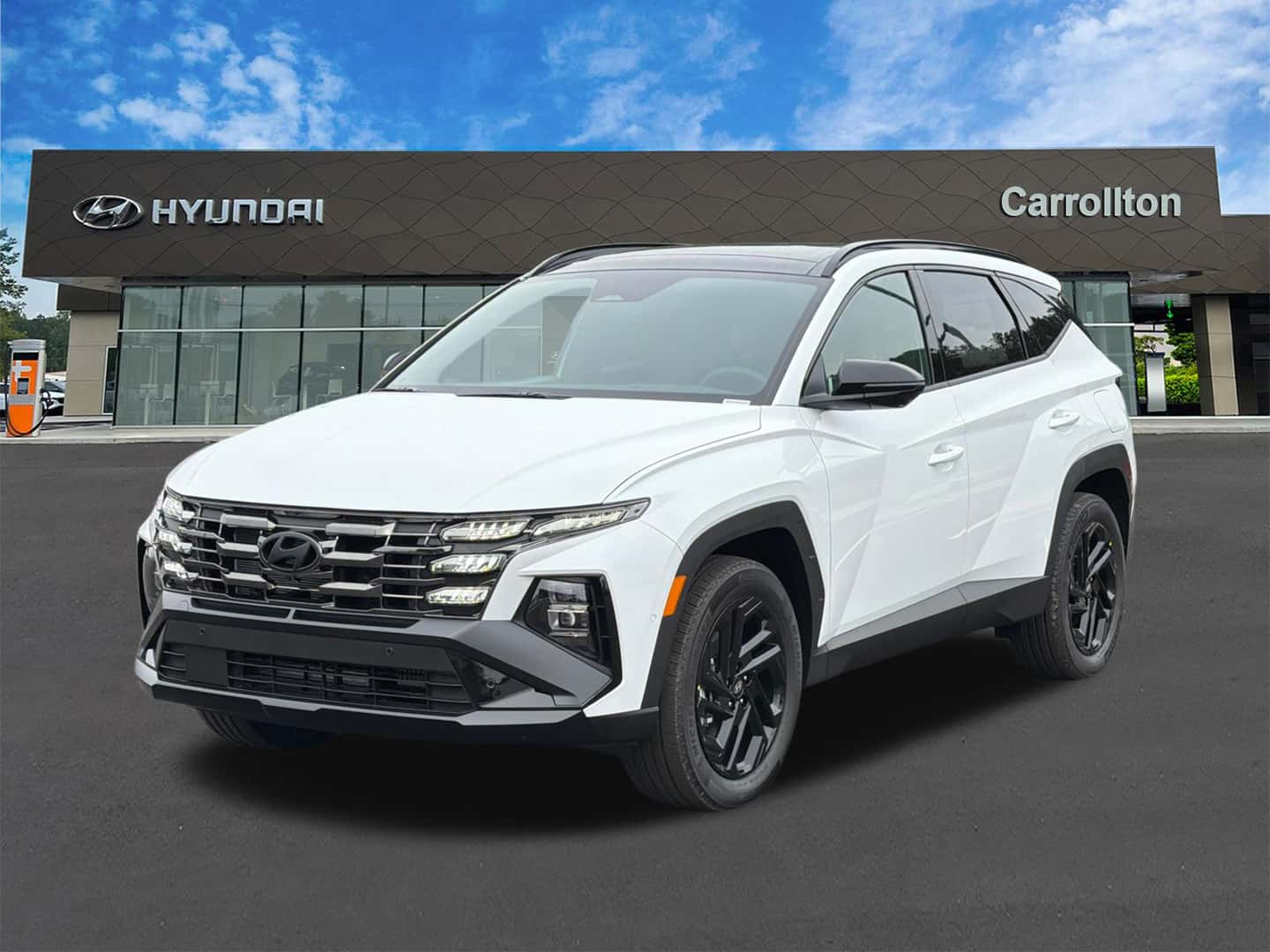
The Tucson and the CR-V are two of the most cross-shopped compact SUVs on the market. They land close on size and efficiency, so the decision comes down to warranty, towing, price, and how you want to go electrified. Here is how they compare for Carrollton drivers.
| Spec | 2026 Hyundai Tucson | 2026 Honda CR-V |
|---|---|---|
| Powertrains | Gas, Hybrid, Plug-in Hybrid | Gas and Hybrid |
| Horsepower | 187 hp gas, 231 hp hybrid | 190 hp gas, 204 hp hybrid |
| Best combined MPG | 38 mpg (hybrid) | 40 mpg (hybrid) |
| Drivetrain | FWD or HTRAC AWD | FWD or AWD |
| Seating | 5 | 5 |
| Cargo behind rear seats | 38.7 cu ft | 39.3 cu ft |
| Max cargo | 74.8 cu ft | 76.5 cu ft |
| Max towing | up to 2,750 lb (gas), 2,000 lb (hybrid) | 1,500 lb (gas), 1,000 lb (hybrid) |
| Basic warranty | 5 yr / 60k mi | 3 yr / 36k mi |
| Powertrain warranty | 10 yr / 100k mi | 5 yr / 60k mi |
| Hybrid battery warranty | 10 yr / 100k mi | 8 yr / 100k mi |
| Starting MSRP | $29,700 gas, $31,300 hybrid | $30,920 gas |
The two are close on power, with the Tucson’s 231 horsepower hybrid edging the CR-V’s 204. On efficiency the CR-V Hybrid nudges ahead at up to 40 mpg combined to the Tucson Hybrid’s 38, and the CR-V gas model also rates a little higher. The Tucson counters with a plug-in hybrid option the CR-V does not offer in the US.
The CR-V is the roomier hauler on paper, 39.3 cubic feet behind the rear seats and 76.5 maximum, against the Tucson’s 38.7 and 74.8. The gap is modest, and both seat five comfortably.
This is a clear Tucson win. The gas Tucson tows up to 2,750 pounds with trailer brakes and the hybrid 2,000, while the CR-V is rated at just 1,500 pounds gas and 1,000 hybrid. For any trailer, the Tucson is the more capable choice.
The Tucson’s coverage is far longer across the board: 5 years or 60,000 miles basic and 10 years or 100,000 miles powertrain, against the CR-V’s 3 years or 36,000 and 5 years or 60,000. The Tucson’s hybrid battery is also covered longer, 10 years or 100,000 miles versus 8 years or 100,000.
The Tucson starts lower, $29,700 for the gas SE against $30,920 for the CR-V LX, and it gives you a plug-in hybrid path the CR-V lacks. Dollar for dollar the Tucson covers more and asks less up front.
Choose the Tucson for stronger warranty, much higher towing, a lower starting price, and the plug-in hybrid option. Choose the CR-V if maximum cargo room and the best fuel economy are your top priorities. Come drive the Tucson at ALM Carrollton Hyundai.
The Tucson leads on warranty, towing, starting price, and powertrain choice, including a plug-in hybrid. The CR-V offers a bit more cargo room and slightly better fuel economy. Your priorities decide.
The Tucson, by a wide margin: 5 years or 60,000 miles basic and 10 years or 100,000 miles powertrain, versus 3 years or 36,000 and 5 years or 60,000 for the CR-V, plus longer hybrid battery coverage.
The Tucson. It is rated up to 2,750 pounds as a gas model and 2,000 as a hybrid, against the CR-V’s 1,500 and 1,000.
The CR-V, slightly: 76.5 cubic feet maximum and 39.3 behind the rear seats, versus the Tucson’s 74.8 and 38.7.
No. The CR-V offers gas and hybrid models in the US. The Tucson adds a plug-in hybrid on top of its gas and hybrid versions.
Pricing shown is Manufacturer’s Suggested Retail Price (MSRP) and excludes destination charges, taxes, title, license, and dealer fees. MSRP is for comparison only and may not reflect actual selling price. Competitor specifications are based on manufacturer and third party data as of October 2026 and are subject to change. Verify details with ALM Carrollton Hyundai before purchase.